The Colony That Almost Said No
How Georgia almost skipped the revolution, and why Savannah changed its mind.
In the winter of 1775, while Massachusetts was already at war, Georgia was still deciding whose side it was on.
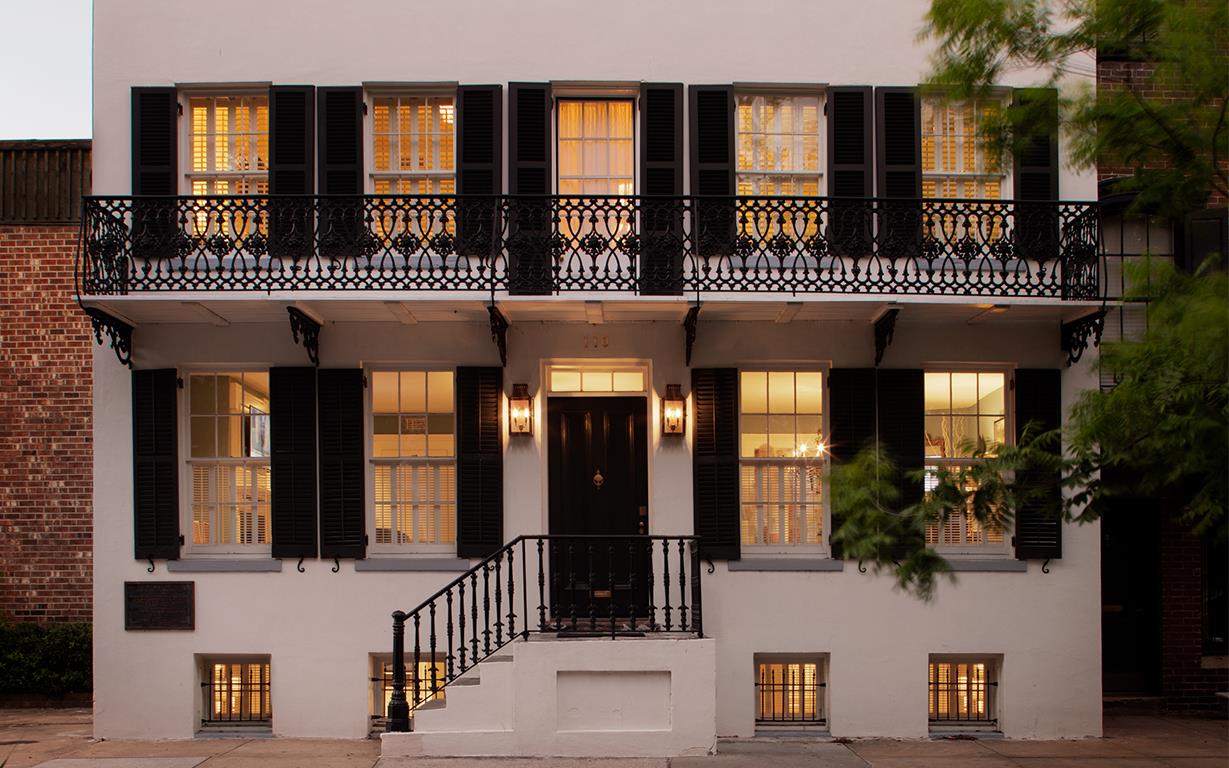
That hesitation is easy to overlook from where we stand now, 250 years on, with the outcome already written. But stand for a moment on East Oglethorpe Avenue in Savannah — in front of the oldest brick house in Georgia, built in 1770 by a Scottish immigrant named Lachlan McIntosh — and try to feel the weight of that uncertainty. The colony was young. The British had protected it. The economy ran on Crown trade. And the men who would need to fight for independence were, in many cases, the same men who had everything to lose if they chose wrong.
Georgia almost said no. The story of why it didn’t — and what it cost, and what it built — runs directly through these streets.
The youngest, most reluctant colony
Georgia was the last of the original thirteen colonies to be established, founded in 1733 under James Oglethorpe as a buffer between the prosperous Carolinas and Spanish Florida. It was a colony designed for defense, built on the labor of settlers who were supposed to be smallholders, not planters. It was also, as a result, the most economically fragile of the thirteen — and the most dependent on the protection of the British Crown.
When the first rumblings of revolution began moving south from Boston and Philadelphia, Georgia’s leadership was not ready to join them. Royal Governor James Wright was not a cartoonish villain — he was a capable administrator who had genuine support among Savannah’s merchant class. The colonial assembly was divided. The Committee of Safety that was forming in defiance of the Crown was small and not yet powerful enough to act.
Georgia sent no delegates to the First Continental Congress in 1774. Of the thirteen colonies, it was the only one absent. That absence was not passive — it was a choice, a signal to the Crown that Georgia intended to stay out of the coming conflict.
|
|
Georgia sent no delegates to the First Continental Congress in 1774. Of the thirteen colonies, it was the only one absent.
|
|
But events have a way of forcing decisions that hesitation tries to postpone.
The crisis on the river
In January 1776, British warships appeared in the Savannah River.
The Council of Safety — the body of patriots that had been quietly building power in the city — moved quickly. Governor Wright was placed under house arrest. And a man named Lachlan McIntosh, a brigadier general in Georgia’s Continental forces, was ordered to take charge of the city’s defense.
McIntosh was born in Scotland in 1725 and had arrived in Georgia as a boy of eleven, brought over with James Oglethorpe’s regiment. He had grown up in the colony, fought for it, built a life in it. By 1776 he was fifty years old and living in the house on Oglethorpe Avenue that still stands today. When the British fleet came up the river, it was his city they were threatening.
On March 2 and 3, 1776, British warships seized eleven rice-laden merchant vessels in Savannah harbor — an engagement that would become known as the Battle of the Rice Boats. It was not a decisive military confrontation. The British got their rice. Governor Wright slipped his house arrest and fled aboard one of the ships. But the act of seizure — of a foreign navy reaching into Savannah’s harbor and taking what it wanted — had an effect that no political argument had managed to produce.
It made the choice real.
|
|
The act of seizure — of a foreign navy reaching into Savannah’s harbor and taking what it wanted — had an effect that no political argument had managed to produce. It made the choice real.
|
|
The decision that changed everything
With the governor gone, the patriots moved. A provincial congress convened in Augusta and drafted a simple frame of government — “Rules and Regulations” — that went into effect on May 1, 1776. Georgia was governing itself for the first time.
Three months later, George Walton, Button Gwinnett, and Lyman Hall traveled to Philadelphia and signed their names to the Declaration of Independence. Georgia had not just joined the Revolution. It had, in the space of a few turbulent months, gone from the most reluctant colony to a full participant in the most consequential act of collective defiance in American history.
The house on Oglethorpe Avenue was standing through all of it. McIntosh was living in it when the British warships came. He was living in it when Georgia chose its side. He would go on to organize Georgia’s military defense, fight under Washington at Valley Forge, survive a political scandal that would have destroyed lesser men, and — in 1791 — welcome President Washington himself through the door.
But that is the next chapter.
This one is about the moment before the decision. The winter of uncertainty. The weight of choosing between a known world and an unknown one. The ships on the river that forced Georgia’s hand.
Two hundred and fifty years later, the house is still there. The bricks laid in 1770, the oldest in the state of Georgia, have outlasted the empire they once belonged to.
|
Book your chapter.
The General Lachlan McIntosh House — Georgia’s oldest brick residence and the home where President Washington slept in 1791 — is available to book through Lucky Savannah. Stay inside the history. Walk the same floors. Look out at the same Spanish moss on Oglethorpe Avenue that McIntosh saw when he chose his side.
luckysavannah.com · #BookHistorysChapters
|
Published on Tuesday, April 7, 2026